Why Does Symbolism Exist?
The Invisible Language That Moves the World
Symbolism isn’t just about crosses, logos, or occult signs. It’s about how our minds translate the invisible: emotions, beliefs, systems of power. Since the first time humans painted on cave walls, we’ve used images to represent what words alone couldn’t capture.
Human beings are symbolic by nature. Our brain thinks in symbols before it forms sentences. That’s why symbols don’t just communicate, they condition.
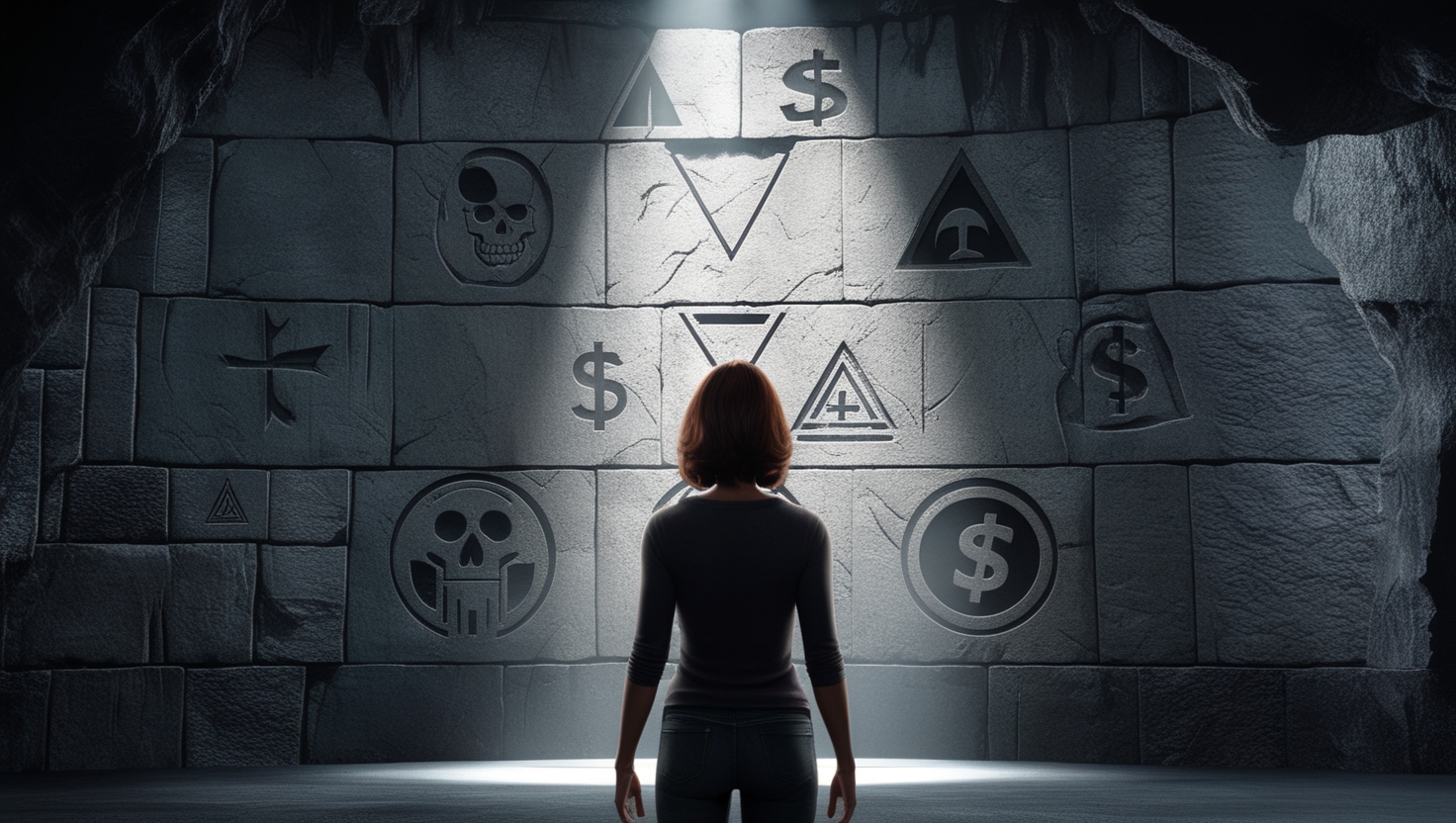
You don’t need a philosophy degree to feel the impact of a skull, a triangle with an eye, or a red flag. These symbols work because they trigger deep human instincts: fear of death, danger alerts, the need to belong, the sense of authority.
Symbols as Shortcuts to the Mind and Human Behavior
Symbols don’t simply represent reality, they create shared realities. They don’t explain. They impose. And they work because humans constantly seek patterns and meaning, even unconsciously. They act as gateways to the collective unconscious, activating universal ideas, archetypes that transcend cultures and eras.
You don’t need to study Greek mythology to feel the power of a snake, an eye, or a crown.
“The symbol is the only means of reaching certain layers of reality.”
— Mircea Eliade
Whoever Controls Symbols, Controls Narratives
Symbols are neutral tools. What changes is who uses them, and with what intention.
- Religions use symbols to inspire faith and devotion.
- Governments use them to establish authority and national unity.
- Brands use them to create identity and emotional loyalty.
- Media uses them to shape reality without argument.
Nike doesn’t sell sneakers. It sells the symbol of achievement. The cross is not just an object, it’s a device of faith and obedience. The emoji you post isn’t neutral. It’s an extension of your social identity.
You See Symbols. But Do You Truly See?
Symbolism is social, cultural, and emotional control.
Have you noticed that danger signs are almost always red? Or that corporations carefully choose colors to transmit trust, power, or desire? That’s not random. That’s semiotics applied to mass behavior.
Symbolism exists because it’s an efficient way to trigger automatic, emotional, and collective responses. It bypasses rationality and goes straight to the root of action: the imagination.
Not Understanding Symbolism Means Accepting Manipulation
Most people never study symbols. That’s exactly why they work so well. The less conscious we are of them, the more power they hold over us. Ignoring symbolism is like walking blindfolded through a minefield: you don’t see it, but you step on it, and feel the impact.
Symbols shape the collective imagination, condition automatic responses, and build structures of power without saying a single word. And the more superficial society becomes, the stronger symbols grow: they communicate without thought, influence without being questioned. That’s why they are so valuable to those who want to influence the masses.
Those who understand symbolism don’t need to shout. They command through silence. Through detail. Through symbol.
“Everything that is truly traditional expresses itself through symbols.”
— René Guénon
See you soon.
Those who see the code don’t fall for the performance.
Kacau Sampaio