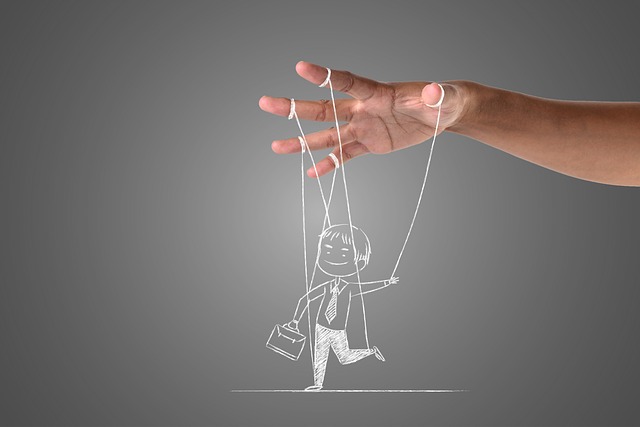
Dependency Is the Business Model of the Day
The hidden cost of outsourcing our thinking
Dependency, once a byproduct of the system, has become one of its primary driving mechanisms. For a long time, selling meant solving a problem. The logic was relatively simple: someone had a clear need, someone else offered a solution, and the transaction ended there. This model assumed autonomy, with a beginning, a middle, and an end.
Today, the business model has shifted. What is being sold is no longer resolution, but retention. Profit no longer comes from closing the loop, but from keeping it open indefinitely. Creating dependency has become more profitable than providing solutions.
This shift fundamentally redefines consumption. Major industries have moved away from profiting primarily from products and toward profiting from predictable behaviors. The less autonomy individuals have, the more stable the flow of consumption becomes. The result is an economic model built on sustaining unmet needs rather than addressing them.
Dependency as the Architecture of the Economic Model
Dependency, therefore, is not a side effect of the contemporary system. It is part of its architecture. Interfaces are designed to capture and retain attention, narratives are constructed to generate fear or urgency, rewards are distributed intermittently, and the feeling of control is never fully satisfied. From a semiotic perspective, this is elementary: no sign is neutral. Every form communicates an intention, and the dominant intention today is to keep individuals inside the loop for as long as possible.

The same pattern appears across different sectors. Apps promise to optimize our lives, medications promise ongoing relief, ultra-processed foods promise instant gratification, and political rhetoric promises emotional security. In each case, a sense of disorder is created first, followed by a quick fix, while the individual’s autonomy is gradually eroded. The underlying structural cause is never addressed because, if it were, the business model would cease to function.
This is why it is misleading to dismiss this phenomenon as a conspiracy theory. We are talking about economic logic. Lasting solutions are difficult to scale. Dependency, on the other hand, scales remarkably well.
The Media as a Regulator of Collective Emotion
The media plays a central role in this process. Its primary function is no longer simply to inform, but to regulate collective emotional states. Fear, outrage, anger, and manufactured scarcity keep audiences in a permanent state of alert. In discourse analysis, this is a form of symbolic management of emotion.
When emotions are managed, behavior becomes predictable. An emotionally destabilized population consumes more, questions less, and readily outsources its decisions to others.
When Independent Thinking Becomes a Form of Deviance
In this context, autonomy itself begins to look like a threat. Although public discourse celebrates freedom, actual practice often reveals the opposite. Thinking independently, questioning ready-made narratives, and being willing to sit with uncertainty are increasingly treated as forms of deviance. Labels emerge as mechanisms of symbolic containment, pushing individuals back toward the center of the dominant narrative and discouraging any break from its established interpretation.
The Psychological and Symbolic Layers of Dependency
Contemporary dependency is not merely material. It manifests emotionally, when individuals require constant validation; cognitively, when they lose confidence in their own ability to interpret information; and symbolically, when they repeat slogans, images, and narratives without examining them.
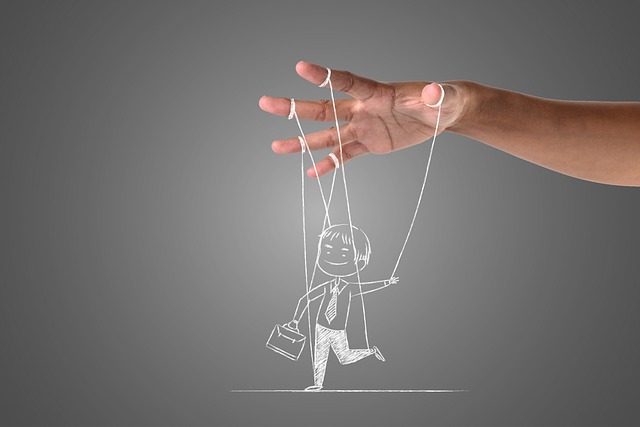
More often than we realize, an aggressive reaction to questioning is not a defense of truth, but a defense of dependency itself.
Artificial Intelligence Dependency and the Atrophy of Thought
This is where one of the newest and least questioned manifestations of this model emerges: dependency on artificial intelligence. Tools that could expand our intellectual horizons and support creative processes are increasingly being used as substitutes for thought. Not as occasional aids, but as permanent cognitive prostheses.
More and more people seem unable to write a text on their own, develop an idea from beginning to end, or sustain a line of reasoning without turning to ready-made answers. This is not an increase in efficiency. It is cognitive atrophy.
Writing has never been merely a technical skill. It has always been a process of organizing thought over time. When someone cannot formulate a complete sentence, the problem is not merely grammatical; it is structural. The thought itself has not been fully formed.
A new generation raised on fragmented stimuli, short-form videos, and instant rewards is showing genuine difficulty constructing coherent, logically connected sentences. The issue is not simply a limited vocabulary, but an inability to sustain meaning. The less people think for themselves, the more dependent they become. And the more dependent they become, the more predictable they are — precisely what the dominant business model requires.
The Ideal Customer of the Contemporary System
The ideal customer of this system is not the loyal one. It is the one who cannot walk away. Everything is designed to preserve a sense of incompleteness, to prevent the cycle from ever closing. After all, actually solving the problem would mean bringing the revenue stream to an end.
Breaking free from this logic is uncomfortable because autonomy demands effort, silence, study, and responsibility. Thinking is exhausting. Interpretation takes work. Perhaps that is why it has become so rare. And precisely for that reason, so valuable.
Ultimately, the issue is not technological, political, or industrial. The central question is simple and deeply uncomfortable:
Who profits from your inability to interpret the world for yourself?
Until that question is asked, the model will continue to function perfectly. And you may well remain its long-term customer.