The Mandela Effect
Are We Misremembering the Past or Living in a Different Reality?
Have you ever been absolutely certain that something happened, only to discover later that it never happened quite the way you remembered? If your memory has ever played a trick on you and, strangely enough, millions of other people remember the exact same thing, then you’ve encountered the Mandela Effect.
This phenomenon fascinates psychologists, physicists, curious minds, and those drawn to conspiracy theories alike. The Mandela Effect challenges not only the reliability of human memory but also the very structure of reality itself. Are we simply dealing with cognitive errors, or could these shared memories be signs that we live in a universe filled with hidden mysteries?
What Is the Mandela Effect?
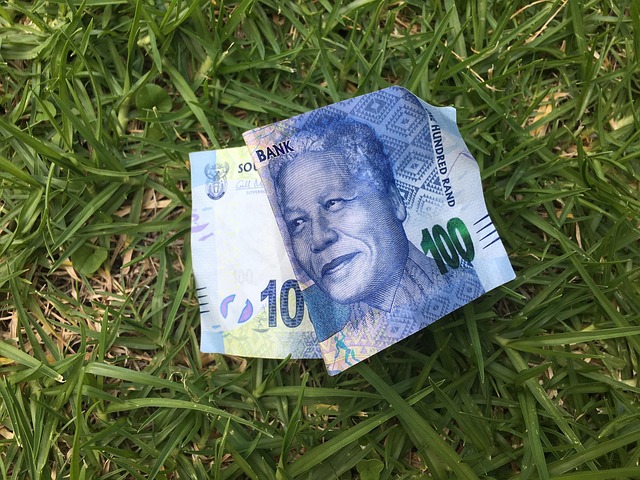
The term emerged in 2009, when researcher Fiona Broome noticed that many people around the world shared the same memory: Nelson Mandela had supposedly died in prison during the 1980s. For those who remembered it, the memory came with vivid details, including alleged news footage, speeches by world leaders, and even memorial tributes. But none of it had happened. Mandela was released from prison in 1990 and died in 2013 at the age of 95.
This striking clash between reality and collective memory gave the phenomenon its name. The Mandela Effect came to describe situations in which large numbers of people share memories that simply do not match the historical record.
Famous Examples of the Mandela Effect
There are countless examples that can confuse even the most observant among us. Here are some of the best-known cases. See how many of these memory lapses you recognize:

Pikachu: Many people swear that Pikachu has a black tip on his tail. The character has never had that feature.
Star Wars: Almost everyone remembers Darth Vader saying, “Luke, I am your father.” The actual line is “No, I am your father.”
Volkswagen: The logo has always featured the small dividing line between the V and the W. Yet many people swear they remember seeing the brand’s logo without it.

Snow White: The famous line “Mirror, mirror on the wall” was never spoken that way in the original Disney film. The Queen actually says, “Magic mirror on the wall.”
Looney Tunes: The cartoon series is called Looney Tunes, not Looney Toons, as many people remember it.
Monopoly: Millions remember the mustachioed man in the top hat as having a monocle. There has never been a monocle in the original character design.

These examples may seem like insignificant details. But the persistence with which collective memory insists on repeating the wrong version makes the phenomenon all the more intriguing.
Could we, collectively, have the power to construct the reality we believe we see?
The Scientific Explanation
Science explains the Mandela Effect through the phenomenon of false memories. Our brains work like story editors. They organize information, fill in gaps, and reconstruct memories based on logic, patterns, and even external influences. When large numbers of people share the same narrative, even if it is distorted, they become more likely to believe that it actually happened.
Research in cognitive psychology shows that memory does not work like a camera. It does not record events in a fixed, perfectly accurate way. Instead, every time we recall something, we reconstruct the memory. It’s like opening a file, editing it, and saving it again. In the process, small errors accumulate and can eventually become shared certainties.
A classic example can be found in eyewitness testimony. Numerous studies have shown that different witnesses can describe the same event in remarkably different ways, while each remains convinced that their account is accurate. That’s because memory is influenced by emotions, expectations, and even the context in which the event is recalled.
But What If There’s More to It?
Although science points to a rational explanation, some believe the Mandela Effect is much more than a collection of mental errors. Certain theories suggest that the phenomenon could be connected to parallel universes, alternate timelines, or even scientific experiments that have somehow altered the reality we know.
The parallel universe hypothesis is one of the most popular. The idea is that multiple versions of reality coexist and that, at some point, part of humanity may have come into contact with a different timeline. This, according to the theory, would explain why so many people share memories that do not align with our accepted version of history.
For those drawn to the darker side of conspiracy theories, another explanation involves CERN, the famous particle accelerator located near Geneva, on the Franco-Swiss border. Some believe that experiments conducted there may have caused ruptures in the fabric of reality, creating glitches in our timeline and changing small details that we now perceive as different memories.
Others connect the phenomenon to media manipulation or even the deliberate control of collective memory. In this scenario, the Mandela Effect would be an indication that our perception of reality is constantly being shaped, whether by governments, corporations, or technologies we have yet to understand.
Memory Glitch or a Glitch in the Matrix?
The Mandela Effect can be viewed from two very different perspectives. To science, it demonstrates that memory is malleable and vulnerable to distortion. To those who look beyond conventional explanations, it may signal that the world we inhabit is far more complex than we imagine, filled with glitches, parallel universes, and mysteries yet to be uncovered.
One thing is undeniable: the phenomenon makes us question something fundamental. To what extent do our memories actually reflect reality? And is reality itself as solid as we think?
What do you make of the Mandela Effect? Have you ever experienced one of these memory glitches? Which of these examples surprised you the most?
Between what we remember and what actually happened, there is always room for the unknown.